Loading...
Welcome to Art Terra Fusion
Premium aquatic and terrarium plants for your aquascape or vivarium. From easy-care varieties to exotic specimens, sourced for KwaZulu-Natal conditions.
Perfect for beginners. Low maintenance and forgiving.
Requires some attention and basic knowledge.
For experienced keepers. Needs specific parameters.
226 plants available

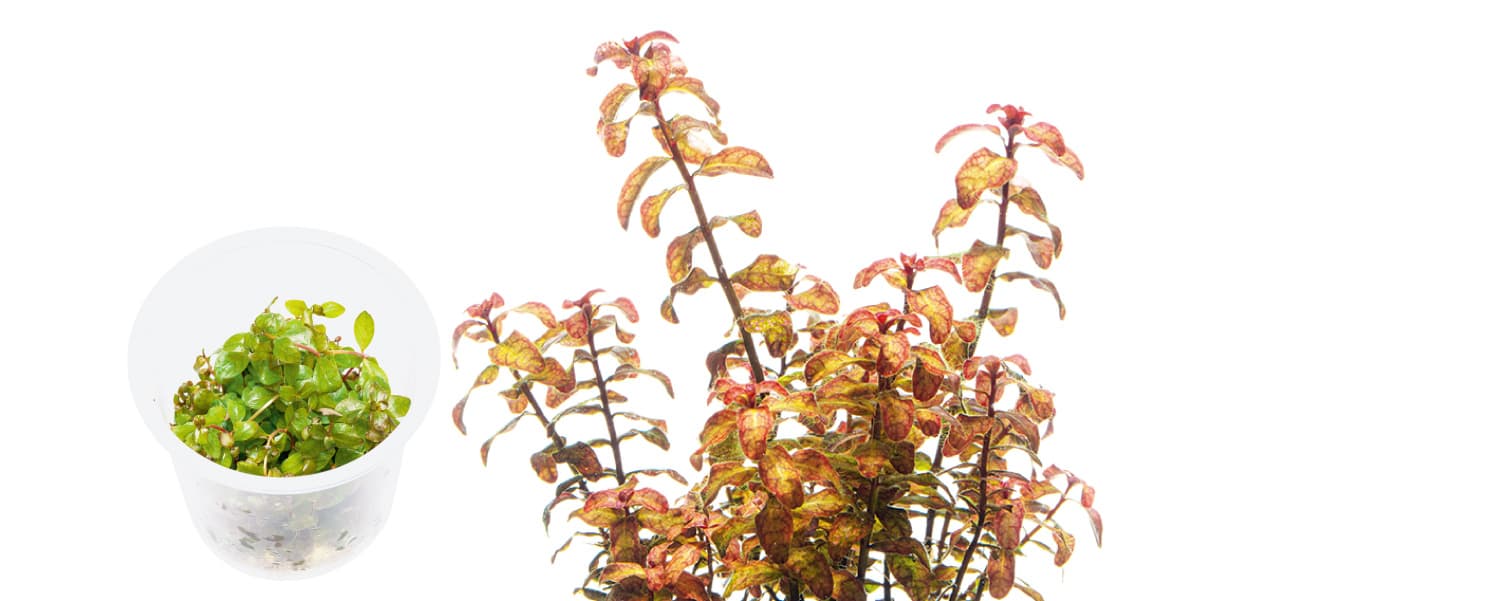
Ludwigia repens 'Super Red'
Ludwigia repens 'Super Red' is a vivid red stem plant that develops intense coloration under strong light. Leaves are broader than many other Ludwigia species, creating bold colour blocks. Regular trimming maintains bushy growth.
R69.00

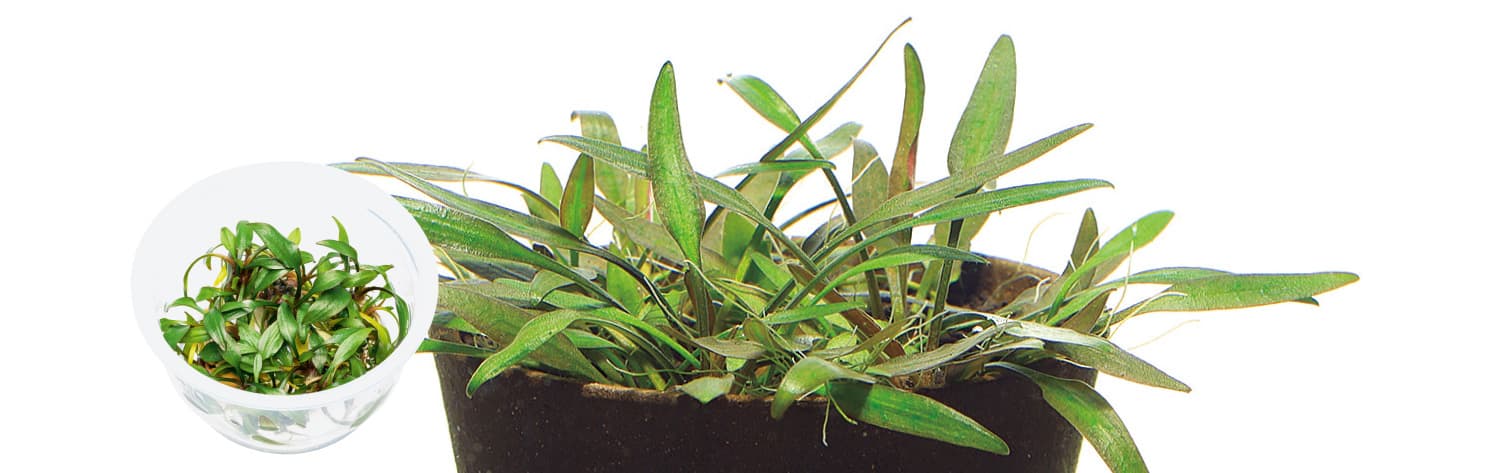
Cryptocoryne parva
Cryptocoryne parva is the smallest species in the Cryptocoryne genus. It grows slowly and remains very low, making it ideal for foreground planting. Once established, it is extremely stable and low maintenance.
R69.00

Cryptocoryne wendtii 'Tropica'
Cryptocoryne wendtii 'Tropica' is a popular cultivar with broad, textured leaves and robust growth. It adapts well to a wide range of aquarium conditions and remains stable once established. Colour deepens slightly under stronger lighting.
R69.00

Alternanthera reineckii 'Rosanervig'
Alternanthera reineckii 'Rosanervig' is known for its pink to red leaves with distinctive light-coloured veining. It grows upright and compact when trimmed regularly. Strong lighting is required to maintain its characteristic coloration.
R69.00

Ludwigia senegalensis
Ludwigia senegalensis is a striking stem plant with fine leaves that develop red to pink tones under strong lighting. It grows upright and adds texture and colour contrast. Best results are achieved with stable CO₂ and consistent fertilisation.
R69.00

Hydrocotyle verticillata
Hydrocotyle verticillata grows on thin creeping stems with round, umbrella-shaped leaves held above the substrate. It spreads horizontally rather than forming a tight carpet and can also climb over hardscape. Growth is fast under stable conditions.
R69.00

Cryptocoryne lucens
Cryptocoryne lucens is a small, narrow-leaved Cryptocoryne suitable for low to moderate lighting. It remains compact and is often used in groups to create subtle texture in the foreground or midground.
R69.00

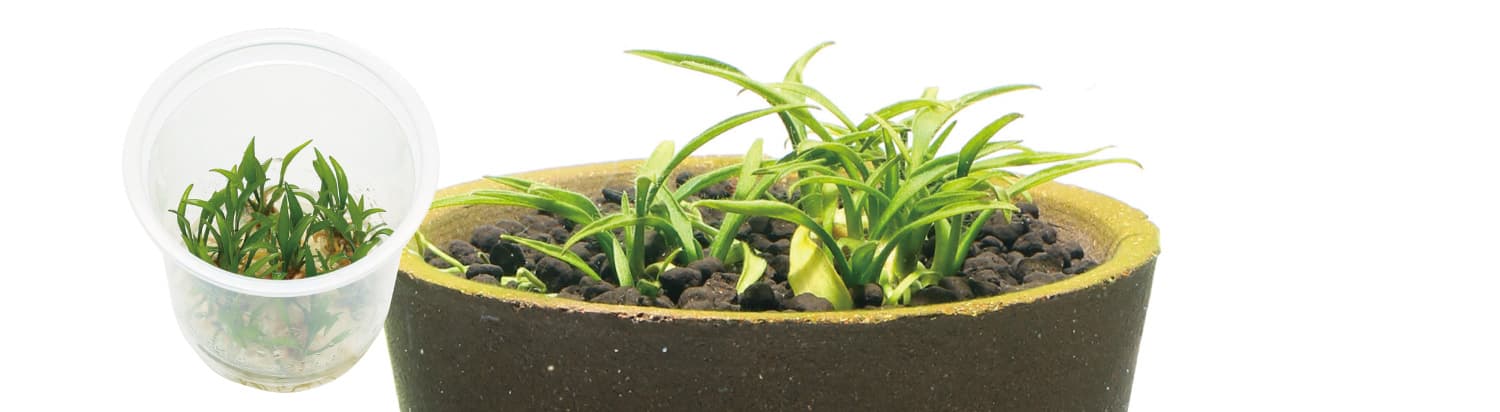
Echinodorus tenellus 'Sharp Leaf'
Echinodorus tenellus 'Sharp Leaf' is a low-growing sword plant that spreads by runners across the substrate. Leaves are narrow and grass-like, forming a natural lawn effect. It performs best in nutrient-rich substrates.
R69.00

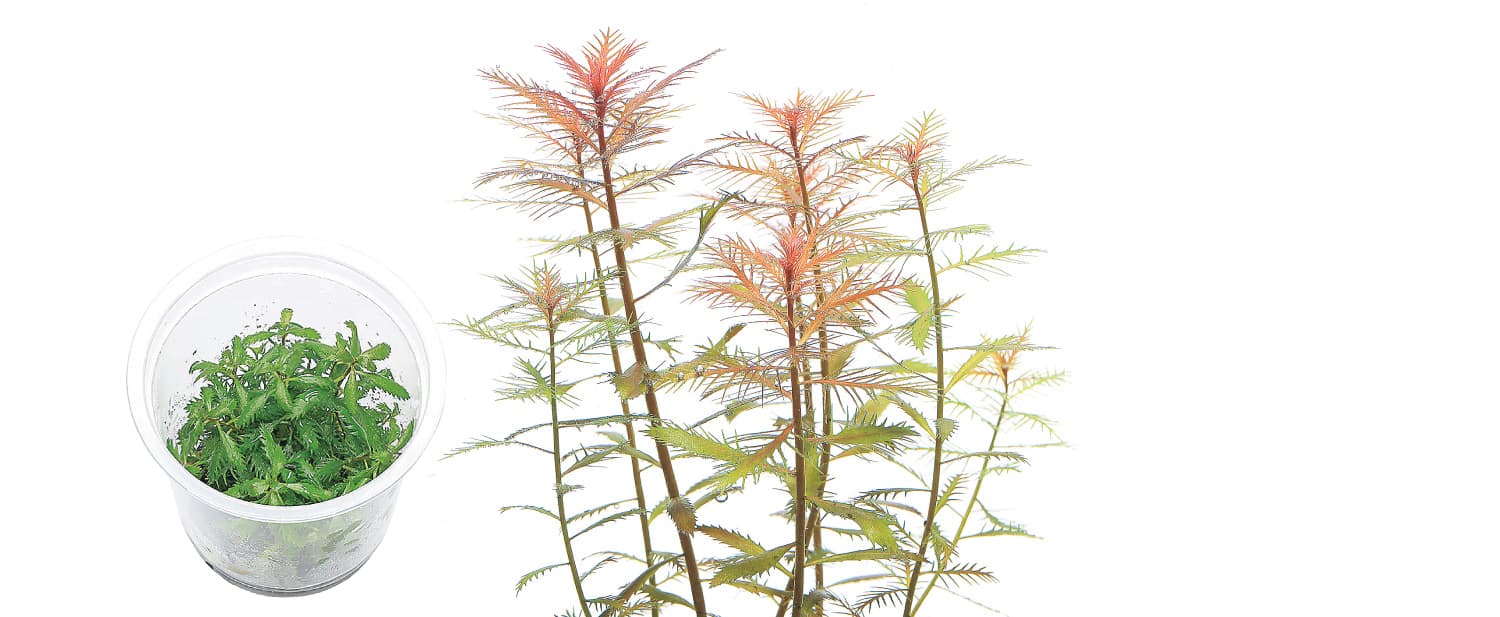
Proserpinaca palustris 'Mermaid Weed'
Proserpinaca palustris is a textured stem plant with serrated leaves that change shape depending on growth conditions. Submerged leaves are finely divided and add strong visual interest. It benefits from higher light to maintain compact form.
R69.00

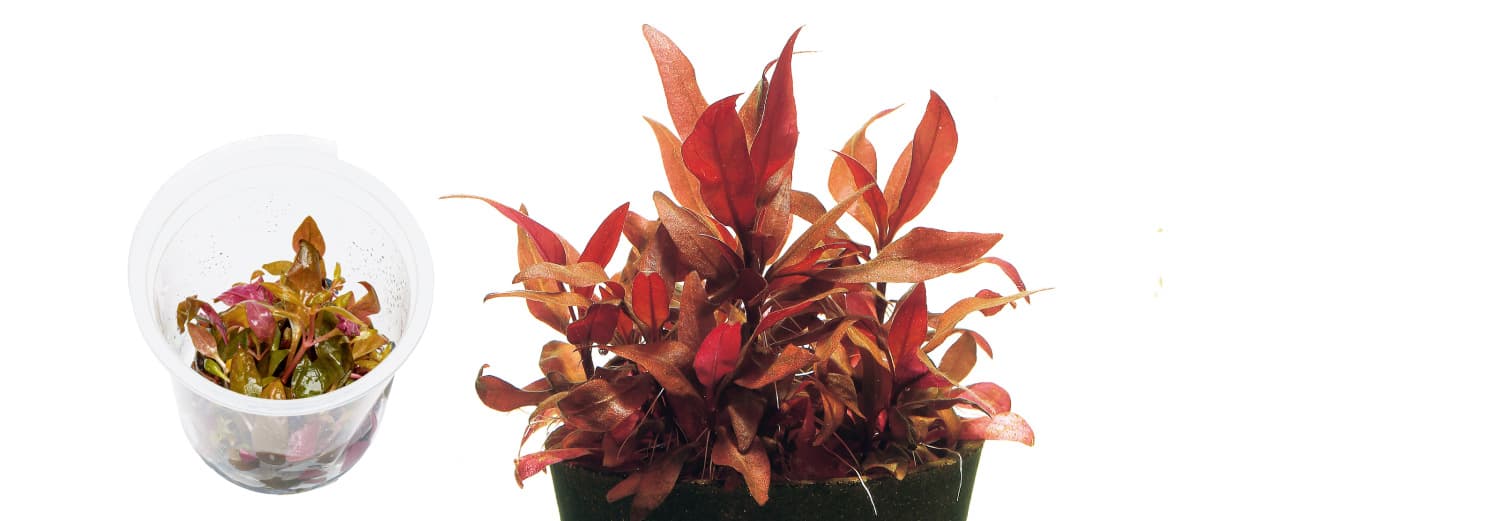
Rotala h'ra
Rotala h'ra is a colourful stem plant known for its red-orange hues and compact growth. Leaves are narrow and closely spaced, giving a refined texture. Strong light and stable CO₂ are key to maintaining intense colour.
R69.00

Rotala 'Ceylon'
Rotala 'Ceylon' is a fine-leaved stem plant with slender growth and soft green tones. It grows upright and branches well when trimmed, allowing for dense background planting. Colour intensity increases slightly under stronger light.
R69.00

Cryptocoryne axelrodi
Cryptocoryne axelrodi is a compact rosette plant with narrow, slightly elongated leaves. It is well suited to smaller aquariums and remains stable once established. Growth is slow, but the plant is tolerant of a range of conditions.
R69.00

Ranunculus inundatus
Ranunculus inundatus is a distinctive plant with fan-shaped leaves growing from creeping stems. It forms loose clusters rather than a carpet and works well as a focal foreground or midground plant. Stable light and CO₂ improve leaf shape and density.
R69.00

Cryptocoryne undulatus 'Red'
Cryptocoryne undulatus 'Red' is a rosette plant with long, slightly wavy leaves showing reddish-brown tones. It establishes slowly but becomes very stable once rooted. Leaf colour deepens in softer, nutrient-rich water.
R69.00

Rotala rotundifolia
Rotala rotundifolia is a versatile stem plant with rounded leaves that shift from green to pink under stronger light. It grows quickly and responds well to trimming, making it suitable for dense background planting.
R69.00

Hygrophila lancea sp. Araguaia
Hygrophila lancea sp. Araguaia is a narrow-leaved stem plant that develops red to bronze tones under strong light. It grows upright and compact when trimmed regularly. This plant adds vertical structure and colour contrast.
R69.00

Eriocaulon sp. Vietnam
Eriocaulon sp. Vietnam is a compact rosette plant with fine, narrow leaves forming a neat crown. It is sensitive to unstable conditions and prefers soft water with strong light. Best suited to experienced aquascapers and high-tech aquariums.
R89.00

Hygrophila difformis
Hygrophila difformis is a fast-growing stem plant with finely divided, feathery leaves. It grows vigorously and is very effective at nutrient uptake, making it useful in newly set up aquariums. Its bright green colour adds volume and softness to backgrounds.
R69.00

Hygrophila polysperma
Hygrophila polysperma is an extremely fast-growing and adaptable stem plant. It is commonly used to stabilise new aquariums by absorbing excess nutrients. Leaves remain green to light pink depending on light intensity.
R69.00

Eleocharis vivipara (Long hair grass)
Eleocharis vivipara is a tall hairgrass species producing long, flowing blades that move naturally with water flow. It can also form floating plantlets at the tips of its leaves. Best used in open layouts or as a background accent.
R69.00

Heteranthera zosterifolia 'Star Grass'
Heteranthera zosterifolia is a bright green stem plant with star-shaped leaf whorls. It grows rapidly and creates a soft, flowing background when planted in groups. Trimming encourages bushier growth and prevents shading.
R69.00

Hygrophila corymbosa 'Stricta'
Hygrophila corymbosa 'Stricta' is a fast-growing stem plant with upright growth and broad green leaves. It is highly adaptable and commonly used to fill background areas quickly. Regular trimming maintains shape and density.
R69.00

Hygrophila pinnatifida
Hygrophila pinnatifida is a distinctive plant with deeply lobed, textured leaves that develop brown to reddish tones. It can be planted in substrate or attached to wood and stone. Growth is compact when trimmed and responds well to stable CO₂.
R69.00

Alternanthera reineckii 'Mini'
Alternanthera reineckii 'Mini' is a compact cultivar with intense red to purple leaves. It grows low and bushy when trimmed regularly, making it suitable for smaller aquariums or foreground accents in high-light setups.
R69.00

Ludwigia glandulosa
Ludwigia glandulosa is a demanding red stem plant with elongated leaves that display deep red to purple tones under strong light. It is sensitive to unstable conditions but rewards careful maintenance with intense coloration and elegant form.
R69.00

Echinodorus "Amazon Sword" Large
The large Amazon Sword is a dominant rosette plant with long, broad leaves that can reach the water surface. It requires ample space and strong root nutrition. Best suited for large aquariums where it can act as a focal point.
R69.00

Echinodorus "Amazon Sword" Medium
The medium Amazon Sword develops larger leaves and a fuller rosette compared to the small form. It is a robust and adaptable plant that serves well as a central or background feature in medium-sized aquariums.
R69.00

Echinodorus "Amazon Sword" Small
The small Amazon Sword is a compact rosette plant with broad green leaves emerging from a central crown. It is well suited to smaller aquariums where space is limited, while still providing a strong planted appearance.
R69.00

Cryptocoryne wendtii
Cryptocoryne wendtii is a hardy rosette plant with broad leaves that adapt well to a wide range of conditions. It establishes slowly but remains stable once settled. Leaf colour and texture can vary depending on light and water parameters.
R69.00

Limnophila aquatica
Limnophila aquatica is a tall, feathery stem plant with finely divided bright green leaves. It grows rapidly and creates a soft, flowing appearance in the background. Regular trimming encourages bushier growth and prevents shading of lower plants.
R69.00

Echinodorus 'Ozelot Red'
Echinodorus 'Ozelot Red' features reddish leaves with characteristic spotting that intensifies under good light. It grows larger than the green form and works well as a focal plant. Adequate root nutrition is important for healthy growth.
R69.00

Echinodorus 'Ozelot Green'
Echinodorus 'Ozelot Green' is a rosette sword plant with green leaves marked by darker spotting. It forms a compact clump and grows steadily in nutrient-rich substrates. Suitable as a midground focal plant in larger aquariums.
R69.00

Ludwigia sp. 'Rubin'
Ludwigia 'Rubin' is a red stem plant known for deep crimson coloration under strong light. Leaves are elongated and slightly curved, creating a bold visual contrast. Consistent fertilisation and CO₂ support strong colour development.
R69.00

Staurogyne repens
Staurogyne repens is a compact, sturdy plant with thick stems and bright green leaves. It grows low and bushy, making it ideal for transitions between foreground carpets and taller background plants. Regular trimming maintains a dense form.
R69.00

Micranthemum sp 'monte carlo'
Micranthemum 'Monte Carlo' is a creeping plant with small, rounded leaves that forms a dense carpet more easily than Hemianthus callitrichoides. It spreads by runners and adapts well to sloped layouts. With trimming, it remains low and compact.
R69.00

Limnophila aromatica
Limnophila aromatica is a soft-textured stem plant with narrow leaves that develop reddish tones under strong lighting. It grows upright and responds well to trimming, becoming dense and bushy. In stable conditions it provides strong contrast against green plants.
R69.00

Glossostigma elatinoides "Glosso"
Glossostigma elatinoides is a very small creeping aquatic plant that spreads quickly by runners when grown submerged. Under strong light and stable CO₂ it forms a dense, flat carpet with leaves hugging the substrate. If light is insufficient, it will grow upward rather than spreading.
R69.00

Ludwigia arcuata
Ludwigia arcuata is a fine-leaved stem plant with narrow foliage that turns orange to red under high light. Its delicate texture provides contrast against broader-leaved plants. Regular trimming helps keep growth compact and vibrant.
R69.00

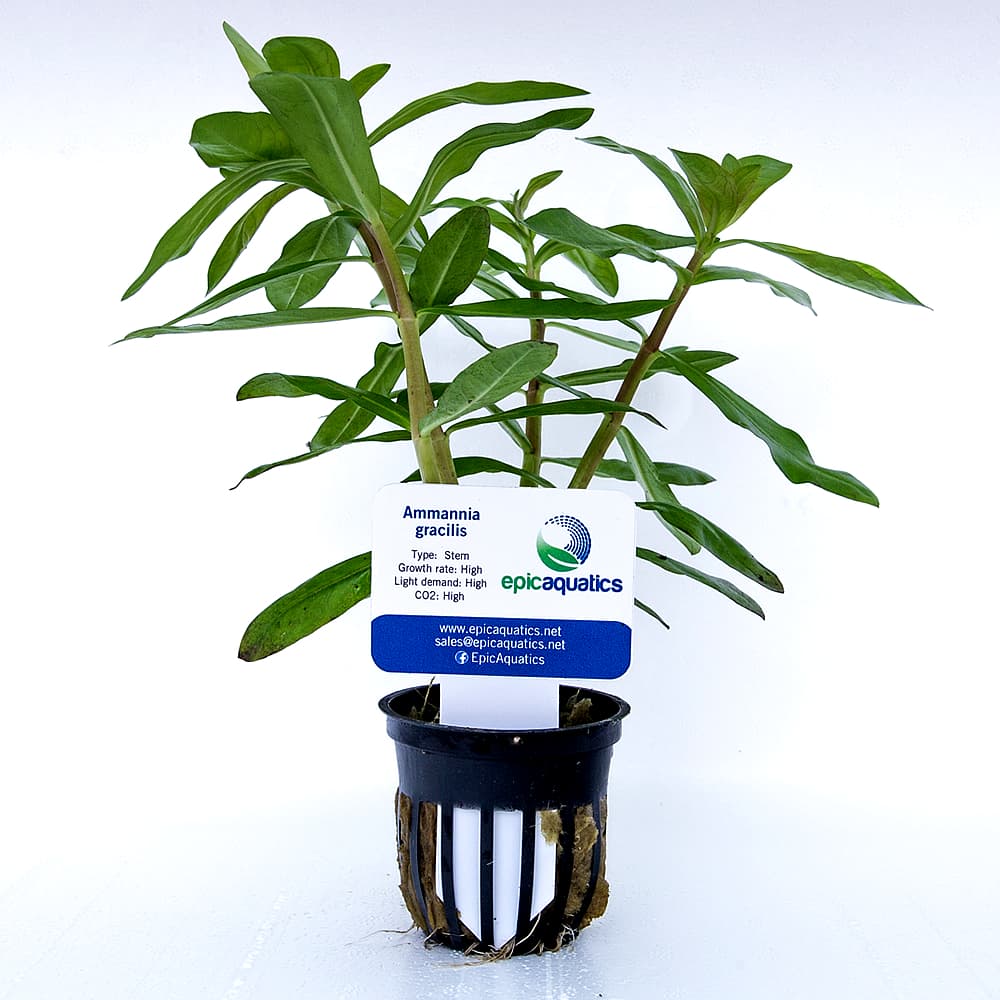
Ammannia gracilis
Ammannia gracilis is a tall, elegant stem plant with narrow leaves that develop deep red tones under strong lighting. It prefers stable, nutrient-rich conditions and benefits from regular trimming to maintain shape. Best suited for experienced aquascapers.
R69.00

Rotala rotundifolia 'Green'
Rotala rotundifolia 'Green' is a fast-growing stem plant with rounded leaves and bright green coloration. It responds very well to trimming, quickly producing side shoots and dense growth. It is commonly used to fill large background areas efficiently.
R69.00

Marsilea hirsuta
Marsilea hirsuta is a low-growing fern with clover-shaped leaves that adapts its growth form based on conditions. Under strong light it stays compact and creeping, while lower light causes taller leaf forms. It spreads slowly by runners and creates a natural foreground effect.
R69.00

Ludwigia repens
Ludwigia repens is a hardy stem plant with oval leaves that range from green to reddish-brown depending on light intensity. It grows upright and branches readily when trimmed, making it easy to shape into dense background groups. It is tolerant of a wide range of conditions.
R69.00

Eleocharis parvula (Dwarf Hairgrass)
Eleocharis parvula is a compact hairgrass species with short, fine blades. It spreads by runners to form a dense carpet and is commonly used to create open, grassy foregrounds. With stable conditions, it remains low and uniform.
R69.00

Lilaeopsis brasiliensis
Lilaeopsis brasiliensis is a grass-like carpeting plant that spreads by runners across the substrate. It forms a low, natural lawn effect when given sufficient light and nutrients. Growth is steady but slower compared to other carpeting plants.
R69.00

Rotala colorata
Rotala colorata is a colourful stem plant known for its pink to red tones under strong lighting. Leaves are small and closely spaced, giving the plant a fine texture. Regular trimming promotes bushy growth and enhances colour intensity.
R69.00

Hemianthus micranthemoides
Hemianthus micranthemoides is a delicate stem plant with small, bright green leaves arranged along fine stems. It can be grown as a low bush in the foreground or allowed to grow taller in the midground. Frequent trimming encourages dense, compact growth.
R69.00

Hemianthus callitrichoides "HC"
Hemianthus callitrichoides is one of the smallest aquatic plants used in aquascaping. It forms an extremely fine, dense carpet when grown under strong light and stable CO₂. Growth is slow and sensitive to instability, but once established it remains very compact and low.
R69.00

Hydrocotyle tripartita
Hydrocotyle tripartita is a fast-growing creeping plant with small, lobed leaves that spreads quickly across the substrate. It forms a loose, natural-looking carpet and can also climb over stones and wood. Regular trimming helps maintain a low profile and encourages horizontal growth.
R69.00

Riccardia chamedryfolia
A liverwort with flat, branching fronds. Grows slowly and prefers clean water with good flow. Creates unique flat texture.
R190.38

Taxiphyllum barbieri
The most versatile and hardy aquatic moss. Attaches to any surface and tolerates wide range of conditions. Excellent for all setups.
R190.38

Vesicularia ferriei
Grows in graceful downward strands. Best positioned on elevated hardscape to show cascading growth pattern. Creates waterfall effect.
R190.38

Vesicularia dubyana
Fast-growing moss similar to Java Moss. Very hardy and adaptable. Creates dense coverage quickly.
R190.38

Vesicularia montagnei
Forms triangular fronds resembling tiny Christmas trees. Slower growing than Java Moss but creates structured appearance.
R190.38

Fissidens fontanus
Unique feather-like structure with leaves in flat rows. Prefers cooler water and good flow. Very slow growth but distinctive texture.
R190.38

Anubias barteri var. nana
Extremely small variety, even more compact than regular nana. Very hardy. Rhizome must not be buried. Perfect for nano tanks.
R346.14

Anubias barteri var. nana
Gold variety with lighter green-yellow tones. Compact and hardy. Rhizome must not be buried. Adds brightness to low-light areas.
R253.84

Anubias barteri var. nana
The classic small Anubias. Extremely hardy and tolerates low light. Rhizome must remain above substrate. Perfect for beginners.
R253.84

Vesicularia ferriei
Weeping Moss has drooping, trailing growth. Creates a cascading effect. Best attached to elevated hardscape. Requires clean water.
R293.86

Vesicularia montagnei
Christmas Moss has triangular branching pattern. Hardy and adaptable. Can be attached to wood or stone. Tolerates various conditions.
R401.76

Fissidens fontanus
Fissidens fontanus is a delicate moss with tiny, overlapping leaves creating a feathery texture. Grows very slowly. Requires clean water.
R253.84

Riccardia chamedryfolia
Riccardia is a delicate liverwort with intricate branching. Grows slowly and prefers clean water. Best attached to hardscape.
R461.52

Anubias gracilis
Anubias gracilis has narrow, triangular leaves on long stems. Unique appearance. Very hardy. Rhizome should be exposed.
R461.52

Anubias congensis
Anubias congensis has elongated, lanceolate leaves. Larger variety. Very hardy and adaptable. Rhizome must not be buried.
R692.29

Anubias heterophylla
Anubias with variable leaf shapes. Larger than nana varieties. Very hardy. Rhizome should be attached to hardscape.
R403.52

Anubias barteri var. nana
Coin Leaf has very small, round leaves. Extremely compact. Very hardy. Rhizome must not be buried.
R477.52

Anubias barteri var. nana
Compact Anubias with elongated, wavy leaves. Very hardy and tolerates low light. Rhizome must not be buried.
R257.00

Anubias barteri var. caladiifolia
Large-leaved Anubias with broad, heart-shaped leaves. Very hardy. Rhizome must not be buried. Grows very slowly.
R403.83

Bucephalandra sp.
Dark Achilles has dark green to bronze leaves. Very slow growth. Attach to hardscape.
R461.52

Bucephalandra sp.
Brownie Jade Black has very dark bronze-green leaves. Extremely slow growth. Best attached to hardscape.
R461.52

Bucephalandra sp.
Brownie Red has bronze-red tones. Very slow growing. Should be attached to hardscape for best growth.
R253.84

Bucephalandra sp.
Kedagang has rounded leaves with slight waviness. Grows very slowly. Attach to wood or stone.
R317.30

Bucephalandra sp.
Red variety with reddish-purple tones under good light. Very slow growth. Best attached to hardscape.
R253.84

Bucephalandra sp.
Sintang Silver has silver-toned leaves. Very slow growth. Attach to hardscape for best results.
R288.45

Bucephalandra sp.
Black Phantom has very dark leaves. Grows extremely slowly. Best attached to hardscape.
R253.84

Bucephalandra sp.
Brownie Marble has mottled bronze-green leaves. Very slow growth. Should be attached to hardscape.
R253.84

Bucephalandra sp.
Black Pearl has dark, glossy leaves. Grows very slowly. Best attached to wood or stone. Very attractive variety.
R253.84

Bucephalandra sp.
Brownie Athena has bronze-toned leaves with slight waviness. Very slow growth. Attach to hardscape.
R253.84

Bucephalandra sp.
Brownie Purple shows purple tones under good light. Grows very slowly. Best attached to hardscape.
R361.00

Bucephalandra sp.
Black Centipede has narrow, dark leaves. Very slow growth. Should be attached to hardscape. Compact variety.
R253.64

Bucephalandra sp.
Brownie Phantom has dark, bronze leaves. Grows very slowly. Best attached to wood or stone.
R361.00

Bucephalandra sp.
Compact red-toned Bucephalandra. Very small and slow-growing. Ideal for nano aquascapes. Attach to hardscape.
R253.84

Bucephalandra sp.
Skeleton King has prominent white venation. Grows very slowly. Best attached to hardscape. Striking appearance.
R253.84

Bucephalandra sp.
Brownie Jade has bronze-green leaves. Very slow growing. Should be attached to wood or stone.
R361.00

Bucephalandra sp.
Velvet-textured leaves with a deep green color. Grows very slowly and prefers to be attached to hardscape.
R361.00

Bucephalandra sp.
Compact Bucephalandra with reddish tones under good light. Very slow growth. Best attached to hardscape.
R361.00

Bucephalandra sp.
Bucephalandra with distinctly wavy leaf margins. Grows very slowly. Attach to wood or stone. Durable plant.
R253.84

Bucephalandra sp.
Large-leaved Bucephalandra with wavy edges. It grows very slowly and should be attached to hardscape. Can be grown emersed or submersed.
R253.84

Homalomena humilis
Bronze-toned variety of Homalomena humilis. It grows slowly and prefers stable warmth and humidity.
R403.83

Peperomia ferreyrae
Peperomia ferreyrae has narrow, bean-like leaves. It prefers drier conditions than most terrarium plants. Good drainage is essential.
R361.00

Schismatoglottis sp.
Schismatoglottis with silver-patterned leaves. It grows steadily under humid conditions and prefers indirect light.
R789.00

Homalomena humilis
This variety has broad leaves with subtle patterning. It prefers warm, humid conditions and grows slowly.
R361.00

Neoregelia lilliputiana
A miniature bromeliad with tight rosettes. Leaves develop red color in good light. Best mounted epiphytically.
R361.00

Fittonia verschaffeltii
Fittonia with striking white veins on green leaves. It grows low and spreading. Requires consistent humidity.
R749.39

Episcia cupreata
This variety has deep bronze-brown leaves with silver markings. It spreads through runners and prefers warm, humid conditions.
R624.45

Marcgravia umbellata
The green form has uniform green leaves. It climbs readily and grows best in high humidity with a vertical structure to climb.
R492.21

Marcgravia umbellata
Marcgravia umbellata has shingling leaves that grow flat against surfaces. The red form shows pink or red tones. Requires vertical structure.
R1175.14

Begonia quadrialata
This subspecies has angular leaves with rusty tones. It grows slowly and prefers stable warmth and humidity.
R1063.22

Begonia venusta
Begonia venusta has velvety leaves with subtle patterning. It prefers shaded, warm environments with consistent humidity.
R2424.89

Begonia melanobullata
Begonia melanobullata has dark, textured leaves covered in small bumps (bullae). It grows very slowly and requires stable conditions.
R1902.61

Begonia ningmingensis
Begonia ningmingensis has compact growth and textured leaves. It requires stable humidity and prefers low light.
R1622.81

Begonia versicolor
Begonia versicolor has frosty, patterned leaves. It grows slowly and prefers stable humidity. Avoid direct light.
R719.95

Episcia cupreata
Episcia cupreata has velvety, colorful leaves with intricate venation. It spreads through runners and prefers warm, humid conditions.
R477.52

Pilea cadierei
Pilea cadierei, the Aluminum Plant, has striking silver markings. It grows quickly under good conditions and prefers consistent moisture.
R2797.95

Begonia plebeja
Begonia plebeja has small, round leaves. It remains very compact and grows best in shaded, humid environments.
R1315.04

Begonia rajah
Begonia rajah has textured, patterned leaves. It grows slowly and prefers stable terrarium conditions with high humidity.
R1398.97

Begonia aequilateralis
Begonia aequilateralis is a compact begonia with small leaves. It prefers shaded, stable conditions and grows slowly.
R955.03

Begonia rieckei
Begonia rieckei has slightly textured, elliptical leaves. It prefers humidity and indirect light. Compact and stable once established.
R719.95

Gynura calciphila
Gynura calciphila has soft, serrated leaves and purple-toned stems. It grows moderately and prefers good air circulation.
R289.00

Neoregalia lilliputensis
A miniature bromeliad with compact rosettes. Leaves turn red in good light. Best mounted or grown as an epiphyte.
R1790.69

Marcgravia coriacea
Marcgravia coriacea is a shingling climber with thick, round leaves that grow flat against surfaces. It requires vertical structure and high humidity.
R1622.81

Begonia elaeagnifolia
Begonia elaeagnifolia has elongated leaves with metallic texture. It grows slowly and upright. Best in stable terrarium environments.
R839.39

Homalomena humilis
The silver form of Homalomena humilis has broad leaves with metallic silver patterning. It prefers warm humidity and stability.
R1091.20

Aglaonema pictum
Aglaonema pictum tri color has striking camouflage-patterned leaves with three distinct tones. Growth is slow and requires warm, humid conditions.
R1398.98

Biophytum sensitivum
Biophytum sensitivum is a small, sensitive plant with compound leaves that fold when touched. It requires stable moisture and humidity.
R257.12

Begonia bipinnatifida
Begonia bipinnatifida has deeply divided, fern-like leaves. It grows slowly and prefers consistent warmth and humidity. Very ornamental when fully grown.
R881.57

Begonia barsalouxiae
This Begonia has soft, textured leaves and grows in a compact rosette. It prefers shaded, stable conditions. New growth is delicate.
R881.57

Begonia polilloensis
Begonia polilloensis has prominent veins and bronze-toned leaves. It stays compact and grows slowly under stable humidity. Avoid waterlogging.
R980.74

Begonia pavonina
Begonia pavonina is known for its iridescent blue-green leaves under low light. It requires high humidity and stable temperatures. Colour fades under strong light.
R749.98

Bucephalandra kishii
Bucephalandra kishii has narrow leaves and a compact rhizome structure. It grows slowly and prefers to be attached to hardscape. Colour deepens under stable conditions.
R807.00

Begonia pheoniogramma
A Begonia with metallic leaf sheen and patterned veins. Leaves remain compact and slightly upright. It thrives in enclosed, humid environments.
R550.00

Begonia quadrialata
This species has angular leaves with a firm texture and subtle colour variation. It prefers stable, warm conditions and high humidity. Growth is steady but controlled.
R1570.62

Begonia dracopelta
Begonia dracopelta is known for its heavily textured leaves and strong venation. It grows upright and compact and responds well to consistent humidity. Avoid drying out.
R1578.00

Begonia chlorosticta
A textured Begonia with thick leaves covered in green spotting. It prefers stable humidity and indirect light. Growth remains compact when conditions are correct.
R1256.50

Homalomena humilis
This Homalomena has broad, glossy leaves with a red undertone on stems and leaf bases. It grows compactly and prefers warm, humid environments. Best suited to terrariums or paludariums.
R404.05

Begonia amphioxus
Begonia amphioxus has long, narrow leaves with striking red spotting. It is a terrestrial species that requires high humidity and stable warmth. Leaves remain upright and architectural.
R785.31

Leptochilus wrightii
A small aquatic fern with narrow, elongated fronds and a compact growth habit. It grows slower than Java fern and prefers shaded conditions. Best attached to hardscape.
R253.64

Bolbitis heudelotii
Bolbitis heudelotii is a fern with dark green, deeply divided leaves that grow slowly and steadily. It prefers stable water and gentle flow and should be attached to hardscape rather than planted in soil. Once established, it becomes very durable.
R403.51

Homalomena humilis + Taxiphyllum peacock moss
A mixed paludarium planting featuring Homalomena humilis Red grown emersed and Taxiphyllum peacock moss grown submerged or emersed. Homalomena prefers warm, humid conditions and stable placement. Not suitable for full submersion.
R749.98

Marcgravia umbellata + Taxiphyllum peacock moss
A paludarium plant combination featuring Marcgravia umbellata grown emersed and Taxiphyllum peacock moss grown submerged or emersed. Marcgravia is a shingling climber that requires high humidity and must not be fully submerged.
R576.91

Vesicularia montagnei
Vesicularia montagnei 'Taiwan' is a slow-growing moss with compact, structured fronds. It prefers clean water and gentle flow and is well suited for controlled, detailed aquascapes.
R334.61

Taxiphyllum sp.
Spiky Moss has pointed triangular growth that stands upright. Pre-attached to lava rock. Adds unique spiky texture to aquascapes.
R334.61

Vesicularia ferriei
Weeping Moss grows in graceful downward strands from lava rock. Creates a cascading waterfall effect. Best positioned on elevated hardscape.
R334.61

Callicostella prabaktiana
Callicostella prabaktiana is a fine-textured moss with soft, feathery growth. It can be grown submerged or emersed and prefers clean water and gentle flow. Growth is controlled and suitable for detailed aquascapes.
R334.61

Vesicularia montagnei
Christmas Moss pre-attached to lava rock. Forms structured triangular fronds. Adds instant character to aquascapes.
R334.61

Taxiphyllum barbieri, Vesicularia dubyana
Classic moss combination on lava rock. Both species are hardy and fast-growing. Creates dense green coverage quickly.
R334.61

Taxiphyllum spiky moss
Taxiphyllum spiky moss is a moss variety with upright, pointed growth that creates a coarse, textured appearance. It adapts well to a wide range of aquarium conditions and grows steadily under low to moderate light.
R334.61

Taxiphyllum barbieri
Taxiphyllum barbieri, commonly known as Java Moss, is a highly adaptable aquatic moss. It tolerates a wide range of conditions and forms dense green mats over time, making it suitable for both beginner and advanced aquariums.
R334.61

Philodendron hederaceum + Taxiphyllum peacock moss
A mixed paludarium plant combination featuring Philodendron hederaceum grown emersed and Taxiphyllum peacock moss grown submerged or emersed. The Philodendron is a terrestrial climber that requires high humidity and must not be fully submerged. The moss provides soft aquatic texture.
R541.86

Eriocaulon breviscapum
Eriocaulon breviscapum forms a compact rosette with needle-like leaves. Extremely sensitive to water hardness and requires very soft, acidic conditions. Very challenging plant.
R386.35

Oedicladium pseudo-rufescens
Oedicladium pseudo-rufescens is a moss with unique reddish-brown tones. Grows slowly and prefers humid conditions. Can be grown submerged or emersed.
R199.80

Begonia vankerckhovenii
Begonia vankerckhovenii is a terrestrial species with decorative foliage. Must be grown emersed in high humidity paludariums. Not an aquatic plant.
R275.97

Begonia sp.
Begonia manaus is a terrestrial species for paludariums. Must be grown emersed with high humidity. Not an aquatic plant. Attractive foliage with unique patterns.
R275.97

Macodes petola
Macodes petola is a stunning jewel orchid with velvety dark leaves marked with intricate gold to copper veining that appears to shimmer. Must be grown emersed in high humidity paludariums. Not an aquatic plant.
R496.00

Riccardia chamedryfolia
Mini Pellia is a liverwort with flat, branching fronds. Grows slowly and prefers clean water with good flow. Creates unique flat texture on hardscape.
R234.02

Taxiphyllum barbieri
Java Moss is one of the most adaptable aquatic mosses. Attaches to wood and rocks, forming dense mats over time. Tolerates a wide range of conditions and is excellent for beginner setups.
R199.80

Vesicularia montagnei
Christmas Moss grows in triangular fronds that resemble tiny Christmas trees. Attaches well to wood and stone. Growth is slower than Java Moss but creates a more structured appearance.
R199.80

Callicostella prabaktiana
Callicostella prabaktiana is a unique moss with feathery branching pattern. Grows well both submerged and emersed. Creates soft, lush texture when attached to wood or rock.
R199.80

Cryptocoryne spiralis
Cryptocoryne spiralis 'Caudigera' has long, narrow ribbon-like leaves that grow tall. It is very adaptable and can tolerate various water conditions. Forms dense stands over time.
R199.80

Hygroryza aristata
Hygroryza aristata is a floating grass with unique boat-shaped leaves. It grows rapidly on the water surface, providing shade and shelter. Roots hang down into the water column.
R199.80

Hygrophila pinnatifida
UK variety has serrated, lobed leaves showing red to purple undersides. Can be grown as stem plant or attached to hardscape. Distinctive appearance with unique leaf shape.
R199.80

Hygrophila odora
Hygrophila odora has broad leaves that grow in pairs along upright stems. Fast-growing and responds well to trimming. Develops subtle bronze tones under strong light.
R199.80

Limnophila aromatica
Compact form of Limnophila aromatica with smaller internodes and leaves. Develops intense red to purple colouration under strong light. Stays shorter than standard variety.
R199.80

Mayaca fluviatilis
Mayaca fluviatilis has moss-like appearance with fine needle leaves covering thin stems. Requires very clean, soft water and strong light. Creates delicate, feathery texture.
R199.80

Bacopa salzmannii
Bacopa salzmannii produces rounded leaves with pink to wine-red undersides under strong light. Growth is upright and stems branch when trimmed. Adapts well to moderate conditions.
R199.80

Samolus parviflorus
Samolus parviflorus Red has broad rounded leaves with reddish tones that grow in a loose rosette. Adapts to both emersed and submersed growth. Compact and easy to maintain.
R199.80

Eriocaulon quinquangulare
Eriocaulon quinquangulare forms a compact rosette of narrow needle-like leaves. Highly sensitive to water chemistry and requires very soft, acidic water. Very slow growth even under ideal conditions.
R199.80

Tonina fluviatilis
Tonina fluviatilis has star-shaped leaf whorls along upright stems. Extremely sensitive to water hardness and requires very soft, clean water to thrive. One of the most challenging aquarium plants.
R199.80

Rotala macrandra
An intensely coloured Rotala variety that develops deep blood-red leaves under very strong light and nutrients. Requires stable conditions and high-quality water to maintain colour.
R199.80

Rotala macrandra
A compact form of Rotala macrandra with smaller leaves that stay closer to the stem. Develops deep red to purple colouration. Remains shorter than standard varieties.
R199.80

Ludwigia senegalensis
Ludwigia senegalensis produces narrow leaves with red to purple undersides. Under strong light the entire plant develops intense burgundy colouration. Demands stable high-quality conditions.
R199.80

Rotala mexicana
Rotala mexicana 'Goias' develops thin stems with small rounded leaves. Under strong light it shows peach to pink colouring. Stays compact and branches well when trimmed.
R199.80

Rotala rotundifolia
Wayanad variety has smaller, rounder leaves than standard Rotala rotundifolia. Under strong light it develops vibrant orange to red colouring. Compact growth habit.
R199.80

Limnophila aromatica
Limnophila aromatica has aromatic leaves arranged in whorls around upright stems. Under strong light it develops bronze to red tones. Fast-growing and benefits from regular trimming.
R199.80

Myriophyllum sp.
A feathery stem plant with delicate, finely divided leaves arranged in dense whorls. Under strong light it develops orange to reddish tones. It grows upright and benefits from regular trimming.
R199.80

Pogostemon erectus
Pogostemon erectus grows in tight vertical columns with needle-like leaves. It creates strong vertical lines and works best when planted in groups. Stable CO₂ keeps growth dense.
R199.80

Proserpinaca palustris
This plant shows very different leaf shapes depending on growth form. Submerged leaves are finely divided, while emersed leaves are broader. Colour can shift to bronze under strong light.
R199.80

Rotala sp.
Rotala nanjean has compact internodes and narrow leaves that stay upright. Under good conditions it shows subtle red to orange colouring. It is easier to manage than many red Rotala species.
R199.80

Rotala wallichii
A softer-growing variant with fine leaves and slightly looser structure. It responds well to trimming and develops gentle pink tones under strong light.
R199.80

Rotala wallichii
This form produces longer, finer leaves than standard Rotala wallichii. It has a delicate appearance and requires stable, clean water to avoid leaf drop. Colour improves under strong light.
R199.80

Drosera spatulata
A small rosette-forming carnivorous plant with spoon-shaped leaves. It adapts well to controlled humid environments and stays compact. Requires mineral-free water at all times.
R199.80

Drosera adelae
Drosera adelae is a carnivorous plant with long narrow leaves covered in sticky glands. It is not an aquatic plant and must be grown emersed in very humid conditions. It prefers consistently moist but not flooded substrate.
R199.80

Ludwigia sphaerocarpa
Ludwigia sphaerocarpa has thin stems with small round leaves that develop yellow to orange tones under strong light. It grows upright and benefits from regular trimming to maintain density.
R199.80

Staurogyne sp.
A more upright Staurogyne species with longer stems and pointed leaves. It branches when trimmed and forms structured bushes rather than low carpets. Growth is steady under moderate light.
R199.80

Lagenandra meeboldii
This variety develops deep red to wine-coloured tones on broader leaves when conditions are stable. Growth is slow and compact, with leaves emerging from a strong central crown. It prefers calm areas with minimal disturbance.
R199.80

Eleocharis fluctans
Eleocharis fluctans grows taller and more flexible than most hairgrass species. It creates a flowing, natural look in larger aquariums. Space and flow help maintain healthy growth.
R199.80

Cryptocoryne spiralis
This Cryptocoryne has long, narrow leaves with a slightly twisted form. It adapts well once settled and prefers stable conditions. Growth is slow but reliable.
R199.80

Helanthium tenellum
A selected form of Helanthium tenellum with finer leaves and compact growth. It spreads by runners and forms a dense grassy foreground when given time. Colour remains light green.
R199.80

Nymphoides hydrophylla
This plant produces round leaves on long stems and can grow both submerged and emergent. It develops a bushy structure when trimmed regularly. Care must be taken as floating growth is restricted locally.
R199.80

Peperomia emarginella
A small creeping plant with round leaves that can be grown emersed or in very shallow water. It spreads slowly and prefers high humidity environments. Best suited for paludariums.
R275.97

Echinodorus opacus
A striking Echinodorus hybrid with broad leaves showing deep red to burgundy colouring. Forms a large rosette and needs substantial space. Heavy root feeder requiring nutrient-rich substrate.
R481.45

Echinodorus opacus
A hybrid Echinodorus with attractive red to brown toned leaves that form a large rosette. Heavy root feeder that requires nutrient-rich substrate and space.
R481.45

Aponogeton madagascariensis
This bulb plant is known for its lace-like leaves with natural perforations. It prefers clean, well-oxygenated water and a stable environment. Growth occurs in cycles and rest periods may occur.
R386.35

Microcarpaea minima
A very small creeping stem plant with delicate leaves and thin stems. It grows low to the substrate and spreads slowly, making it suitable for fine-detail foreground areas.
R199.80

Eleocharis acicularis
A classic hairgrass species that forms loose, natural-looking meadows. It grows taller than the mini form and sways gently with water flow. Regular trimming helps maintain height.
R199.80

Ranunculus inundatus
Ranunculus inundatus produces distinctive lobed leaves on upright stems. It spreads by runners and creates a natural, slightly wild appearance. Strong light keeps the leaves compact and upright.
R199.80

Lagenandra meeboldii
This cultivar is known for its pale green to silver-toned leaves with pronounced veins. Growth is slow and compact, making it suitable for calmer sections of the aquarium. It benefits from stable parameters and low disturbance.
R199.80

Lagenandra meeboldii
This variety develops bronze to reddish tones depending on light and nutrients. Leaves are thicker and slightly textured. Colour improves with stability rather than intensity.
R199.80

Lagenandra meeboldii
A hardy Lagenandra with elongated green leaves and a strong root system. Growth is steady but slow, making it easy to manage. Thrives in stable, low-flow environments.
R199.80

Lagenandra keralensis
This Lagenandra species has broad, sturdy leaves with a deep green tone. It grows slowly and forms a compact clump. Well suited to calm areas of the aquarium.
R199.80

Utricularia graminifolia
A fine, grass-like carnivorous aquatic plant that forms a soft green carpet. It is sensitive during establishment but becomes stable once rooted. Requires clean water and patience.
R199.80

Hydrocotyle tripartita
A compact form of Hydrocotyle with small, clover-like leaves. It spreads quickly and can creep over hardscape or substrate. Regular trimming keeps it tidy.
R199.80

Cryptocoryne sivadasanii
A rare Cryptocoryne with narrow, elongated leaves and a delicate appearance. It grows slowly and prefers soft, acidic water. Best left undisturbed once planted.
R199.80

Cryptocoryne spiralis
This variant shows subtle striping along the leaves with a textured surface. Growth is upright and slightly spreading over time. Stability is more important than strong light.
R298.04

Cryptocoryne spiralis
A red-tinted form of Cryptocoryne spiralis with long, narrow leaves. Colour intensifies slightly under brighter light but remains natural and subdued. Suitable for taller layouts.
R298.04

Cryptocoryne wendtii
This cultivar shows subtle pink to copper tones on the leaves under stable lighting. Leaf shape is compact with gentle rippling. Like most Crypts, it prefers minimal disturbance once planted.
R299.70

Eleocharis montevidensis
Eleocharis montevidensis is a tall hairgrass species with stiff, upright blades that create a wild, reed-like appearance. It does not form a tight carpet but instead grows in loose clumps. Best suited to larger aquariums with height.
R199.80

Hygrophila ringens
A narrow-leaved Hygrophila with upright growth and a clean, structured look. Responds well to trimming and maintains shape under moderate light. Colour remains green.
R275.97

Sonerila calophylla
This is a small semi-aquatic plant often grown emersed or in very shallow water. Leaves are soft and textured with visible veins. Best suited for paludariums or humid setups.
R199.80

Anubias barteri var. nana
A rare Anubias variety with white variegation on dark green leaves. Growth is extremely slow and requires stable, low-light conditions to prevent algae on the leaves. Best attached to hardscape.
R717.00

Cryptocoryne balansae
Cryptocoryne balansae produces long, ribbon-like leaves with heavily textured surfaces. It adds vertical movement and works best in taller tanks. Once established, it becomes very resilient.
R199.80

Cryptocoryne wendtii
A selected cultivar with broader leaves and a slightly reddish-brown tint. Growth is compact and controlled, making it ideal for structured layouts. Stable water parameters are key.
R199.80

Cryptocoryne wendtii
This form develops brown to bronze leaf tones, especially under moderate light. Leaves are slightly rippled and form dense clumps over time. Very hardy once settled.
R199.80

Cryptocoryne parva
Cryptocoryne parva is the smallest Cryptocoryne species commonly used in aquariums. It stays low and compact but grows very slowly. Patience is required for full coverage.
R199.80

Cryptocoryne wendtii
A classic Cryptocoryne with broad green leaves and a robust structure. It tolerates a wide range of conditions and adapts easily to most aquariums. Leaf size varies depending on light and nutrients.
R199.80

Cryptocoryne lucens
This is a small, low-growing Cryptocoryne with narrow leaves that form neat clumps. It is one of the more stable Crypt species and rarely melts once established. Suitable for subtle foreground transitions.
R199.80

Cryptocoryne axelrodi
Cryptocoryne axelrodi has narrow, elongated leaves and a compact growth habit. It adapts well to submerged conditions but prefers stability and low disturbance. Colour remains green to olive under most lighting.
R199.80

Cryptocoryne spiralis
This Cryptocoryne has long, narrow leaves that grow upright and slightly twisted. It is more tolerant of brighter light than many other Crypts but still prefers stable conditions. Like most Cryptocoryne, it may melt when moved.
R199.80

Helanthium tenellum
Helanthium tenellum spreads by runners and forms a grass-like foreground. Under higher light, leaves remain short and compact. Colour may shift slightly reddish under strong lighting.
R199.80

Anubias barteri var. nana
Anubias 'Petite' is a very small, slow-growing Anubias with thick, dark green leaves. It attaches easily to rock or wood and should not be planted in soil. Growth is extremely stable and long-lasting.
R386.35

Rotala sp.
Rotala 'H'ra' is a fine-leaved red Rotala that develops orange to deep red tones under strong light. It grows upright and branches well when trimmed. Stable CO₂ and clean water are important for colour.
R199.80

Riccia fluitans
Riccia fluitans is a bright green liverwort that grows in dense, irregular mats when attached to hardscape. It does not root and must be tied down to remain submerged. Regular trimming is needed to prevent detachment.
R199.80

Pogostemon helferi
Pogostemon helferi forms compact rosettes with curled, textured leaves. It grows close to the substrate and does not spread by runners, making it ideal for structured layouts. Strong light keeps the plant short and dense.
R199.80

Hygrophila lancea
This plant has long, narrow leaves with a sharp shape and can develop red tones under strong light. Growth is upright and compact when trimmed regularly. It responds well to stable fertilisation.
R199.80

Cyperus helferi
Cyperus helferi has long, narrow leaves that arch outward from the base, creating strong movement in the aquarium. It prefers stable flow and space to spread. Unlike most Cyperus species, it grows fully submerged.
R199.80

Staurogyne repens
Staurogyne repens is a sturdy low-growing plant with thick stems and oval leaves. It grows horizontally when trimmed and is often used to create dense midground bushes. Compared to carpeting plants, it has a heavier, more structured look.
R199.80

Micranthemum tweediei
Monte Carlo is a creeping aquatic plant with slightly larger leaves than HC Cuba, making it more forgiving and easier to grow. It spreads by runners and forms a soft, natural carpet when given enough light. Growth remains compact under good conditions.
R199.80

Eleocharis acicularis
A very fine hairgrass that forms short, dense tufts. It spreads slowly by runners and stays low when trimmed regularly. Ideal for natural-looking foregrounds.
R199.80

Pogostemon stellatus
This plant has finely divided leaves arranged in star-shaped whorls along upright stems. It prefers strong light to avoid stretching and benefits from consistent flow. Trimming helps keep it compact.
R199.80

Rotala wallichii
A delicate Rotala with very fine, needle-like leaves. It requires clean water and strong light to maintain structure and colour. When healthy, it develops soft pink to red tones.
R199.80

Rotala rotundifolia
This is the standard Rotala rotundifolia, known for its adaptability and fast growth. Leaves are rounded and stems branch heavily when cut. It is often used as a filler plant due to how easily it shapes.
R199.80

Hemianthus glomeratus
Hemianthus glomeratus is a fine-stemmed background plant that grows upright with small leaves along flexible stems. It responds well to trimming and quickly becomes bushy. Growth is reliable and not overly demanding.
R199.80

Hydrocotyle verticillata
Hydrocotyle verticillata grows on thin stems with round, umbrella-shaped leaves. It spreads horizontally across the substrate rather than forming a tight carpet and can also climb over hardscape. Growth is fast in stable conditions.
R199.80

Rotala rotundifolia
This is a green form of Rotala rotundifolia with rounded leaves and fast vertical growth. It branches easily when trimmed and quickly fills space, making it useful for dense backgrounds. Colour remains green under moderate light.
R199.80

Rotala macrandra
Rotala macrandra is a demanding red stem plant with large, thin leaves that show intense colour under strong light. It is sensitive to poor water quality and instability, but rewards good care with deep reds and pinks. Regular trimming helps maintain shape.
R199.80

Hemianthus callitrichoides
Hemianthus callitrichoides is one of the smallest known aquatic plants used in aquariums. It forms an extremely fine, compact carpet when conditions are stable, but grows slowly and reacts badly to fluctuations. Once established, it stays very low and even.
R199.80

Glossostigma elatinoides
Glossostigma elatinoides is a very small creeping aquatic plant that spreads quickly by runners when grown submerged. Under strong light and stable CO₂ it forms a dense, flat carpet with leaves hugging the substrate. If light is insufficient, it will grow upward rather than spreading.
R199.80